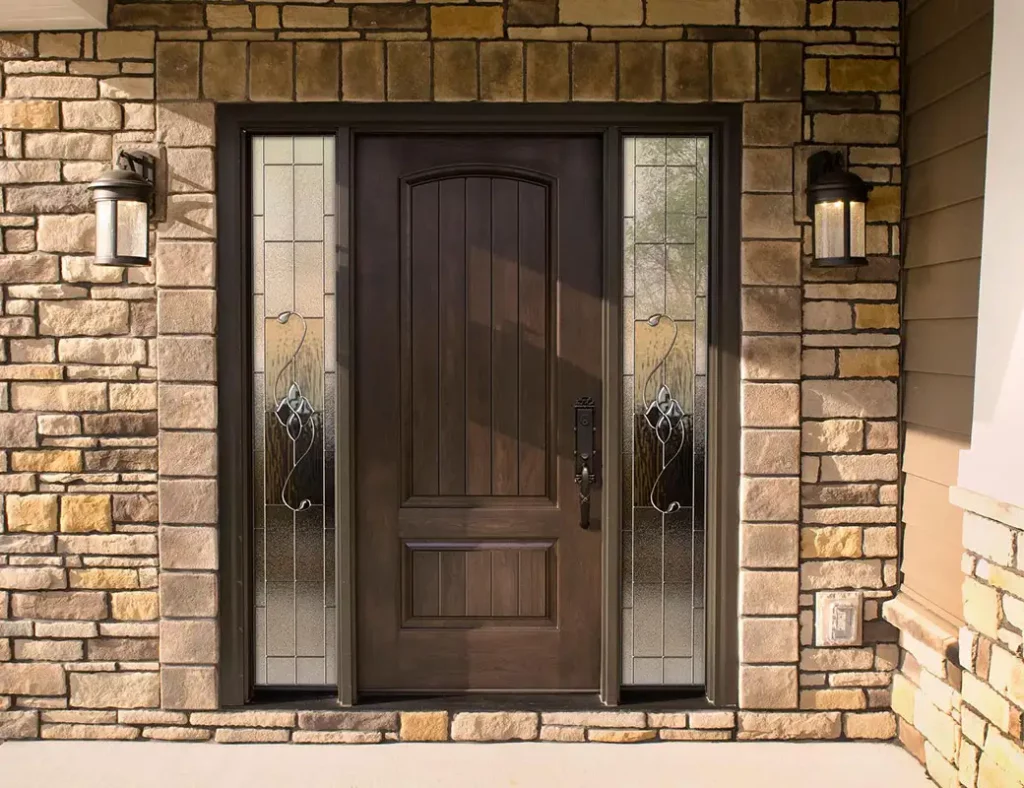
The honest answer to “what does a new entry door cost” is that it depends on quality. A hollow builder-grade door and a custom, energy-rated entry system are completely different products at very different prices. At Sutton’s, we install ProVia doors — a premium American-made line — so this guide uses ProVia as the baseline. For a full front-entry project in Springfield, it’s not unusual to land around $10,000, though the range is wide depending on the door line, glass, and configuration you choose. Here’s a full breakdown of what Springfield homeowners can expect to pay from Sutton’s in 2026.
Entry Door Replacement Cost Springfield IL: What ProVia Doors Cost
Installed pricing depends mostly on which ProVia line you choose and how much glass and customization the design includes. General installed ranges:
- Steel (ProVia Legacy): roughly $3,000 to $8,000 — the value tier, built for security and durability.
- Fiberglass (ProVia Signet / Ascent): roughly $5,000 to $12,000 — highly customizable, with a realistic woodgrain look and strong insulation.
- Premium fiberglass (ProVia Embarq): roughly $10,000 to $25,000 — ProVia’s top tier, with thicker fiberglass and a foam-insulated core for the best energy performance.
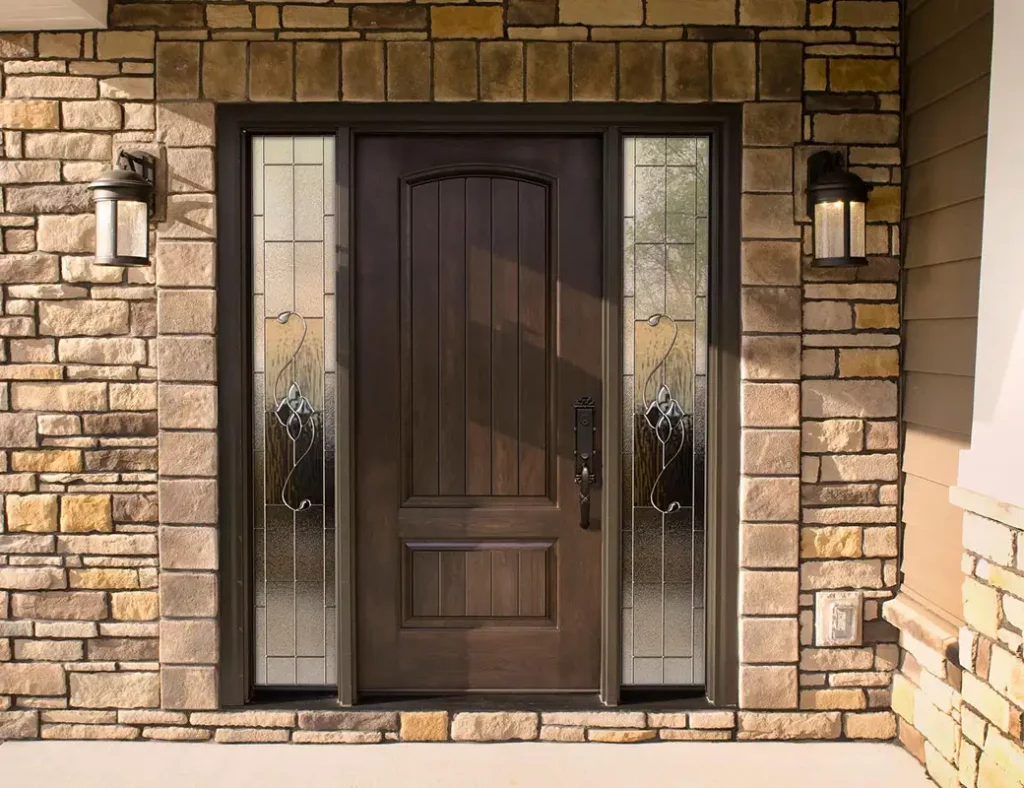
Most full front-entry projects — a door paired with sidelights and decorative glass — commonly land around $8,000 to $12,000, which is why a typical project averages close to $10,000. A simple single door with no glass costs less; a double-door or fully custom entrance with premium hardware costs more. ProVia updates its lineup periodically, so we’ll confirm the exact current models and pricing during your in-home estimate.
What drives the price
- Door line and material — steel is the most budget-friendly; premium fiberglass costs more but performs best.
- Glass — decorative glass, sidelites, and transoms add cost and curb appeal.
- Size and configuration — a standard single door costs less than an oversized or double-door setup.
- Hardware and security — upgraded handlesets, multi-point locks, and smart locks add up.
- Finish — factory paint and realistic woodgrain stains vary in price.
- The opening — rot, water damage, or an out-of-square frame adds prep work.
Why big-box door prices look cheaper
You’ll see entry doors at big-box stores for a fraction of these numbers, and it’s fair to ask why that gap exists. Here’s what that sticker price leaves out:
- No installation. The shelf price is the door only. Professional installation — removal, sealing, insulation, trim, and cleanup — is a separate cost, and it’s where a door’s real-world performance is won or lost.
- No workmanship warranty. A big-box purchase doesn’t come with a contractor standing behind the installation. If it leaks, drafts, or sticks a year later, that’s on you.
- ProVia’s warranty requires a certified installer. ProVia is sold and installed through authorized dealers and contractors — not off a retail shelf. The manufacturer warranty is designed to take effect when the door is installed by a ProVia dealer or contractor, so a bargain door installed by just anyone may not carry the coverage you expect.
- They aren’t the same product. Big-box entry doors don’t perform anywhere close to ProVia on insulation, air-sealing, and durability. Compare the whole-unit NFRC numbers below and the gap is real — you’re not paying more for the same door, you’re paying for a measurably better one.
How entry door performance is measured
A big part of what drives entry door cost is measurable performance — not marketing. Exterior doors are independently tested and rated by the National Fenestration Rating Council (NFRC), and the results appear on the NFRC label. The four numbers that matter most:
- U-Factor — how well the door keeps heat in. Lower is better. Door ratings run from about 0.10 to 2.00; a well-insulated entry door typically lands around 0.15 to 0.30.
- Solar Heat Gain Coefficient (SHGC) — how much of the sun’s heat passes through any glass. Measured from 0 to 1; lower blocks more heat. It’s near zero on a solid door and mainly matters on doors with larger glass.
- Air Leakage — how much air slips through the unit, measured in cubic feet per minute per square foot. Lower means a tighter door; quality doors rate around 0.3 or lower.
- Visible Transmittance (VT) — how much natural light the glass lets in, from 0 to 1.
One important detail: the NFRC rates the whole unit — slab, frame, glass, and any sidelites together — not just the foam core. A door advertised with an impressive “core R-value” can still perform poorly if the frame and edges leak, which is why the whole-unit U-Factor is the honest number to compare. Doors that meet federal ENERGY STAR standards for our North-Central climate zone have been tested this way, so Springfield homeowners can compare products on an even footing.
Why installation is part of the performance
Here’s the catch every rating label leaves out: NFRC numbers assume a perfect installation. A high-performance door set into an old, out-of-square frame will still leak air, stick, and waste energy. That’s why Sutton’s installs complete, properly sealed door systems — a door only delivers its rated performance when it’s fit, sealed, and insulated correctly.
What’s included with a Sutton’s entry door installation
- Free in-home consultation with ProVia door and finish samples
- Precise custom measurement and factory ordering
- Professional installation, sealing, and full cleanup
- ProVia’s manufacturer warranty, plus Sutton’s two-year workmanship guarantee
Get a free entry door estimate in Springfield
Sutton’s has helped Central Illinois homeowners upgrade their homes since 1946. Whatever your budget looks like, we’ll walk you through fiberglass and steel entry door options, show you the performance ratings for each, and give you a firm, no-pressure price for your home.
Call (217) 528-3911 or request a free estimate online.