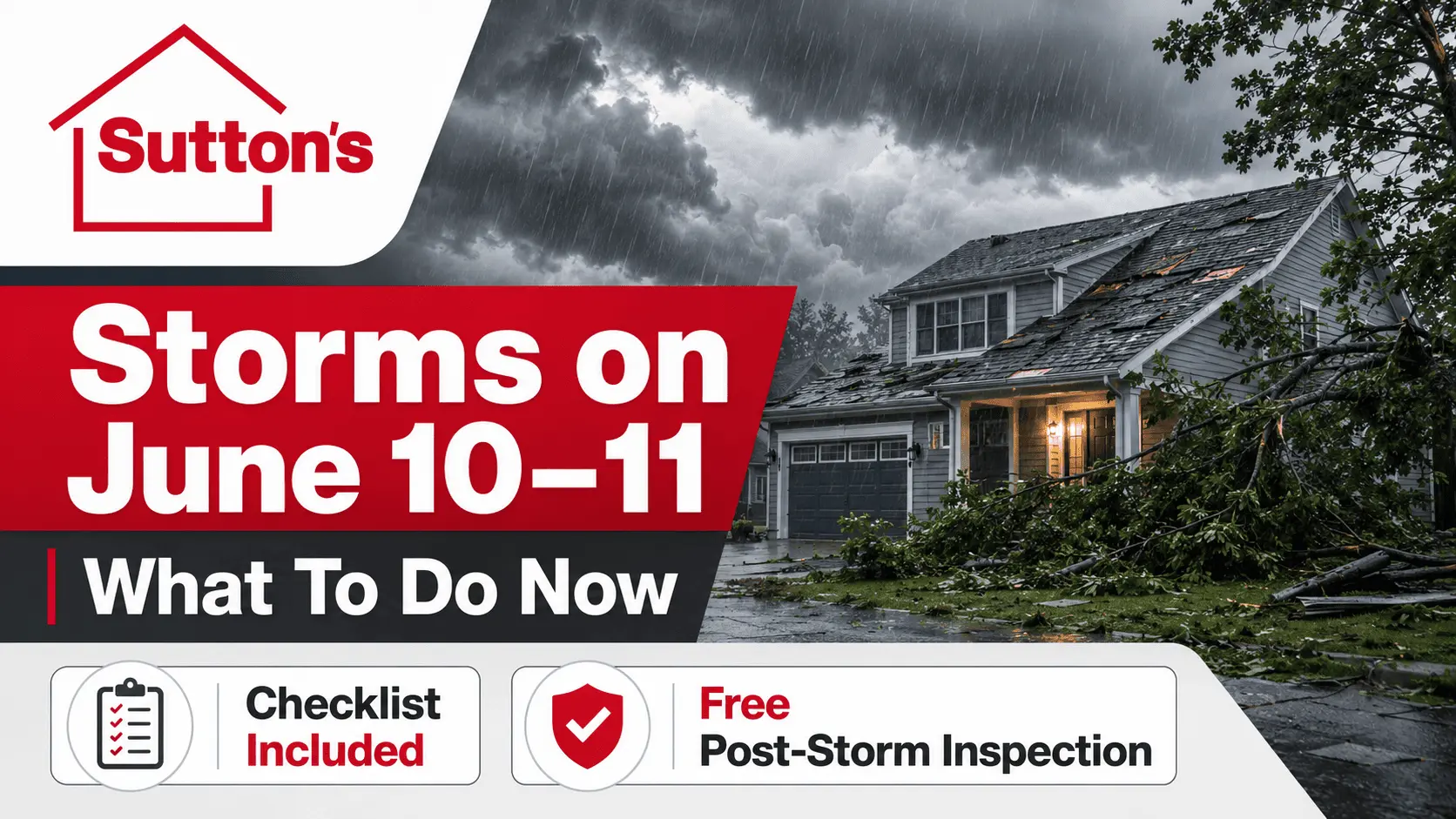
On the night of June 10–11, 2026, a powerful line of severe storms tore across Central Illinois, bringing damaging winds, large hail, and even tornadoes to communities throughout the region. Springfield was hit hard — City Water, Light & Power reported more than 10,000 customers without power at the peak — with downed trees, structural damage, and outages also reported in nearby communities like Jacksonville and Mechanicsburg.
If your home took a hit, you’re not alone — and you’re probably wondering what to do next. Here’s a calm, clear checklist for handling storm damage the right way, plus how Sutton’s can help you get your home back to normal.
Storm damage Central Illinois residents are cleaning up after didn’t stop at roofs — siding, windows, and gutters took a hit too, and hidden damage is easy to miss.
What Moved Through Central Illinois
The National Weather Service’s Central Illinois office reported widespread wind gusts of 60–70 mph along and north of the I-72 corridor, with some areas seeing even stronger straight-line winds. Storms dropped hail up to golf-ball size (1.75 inches) in parts of the region and spun up several tornadoes. Tens of thousands of homes and businesses lost power, and crews spent days clearing downed trees and limbs.
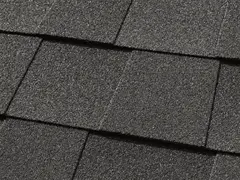
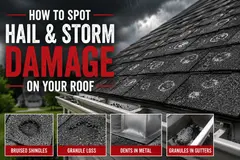
Wind and hail like that don’t always leave obvious damage. A roof can look fine from the ground while shingles have been bruised, cracked, or stripped of the granules that protect them — and that hidden damage is exactly what leads to leaks weeks or months later.
What to Do After Storm Damage
- Stay safe first. Watch for downed power lines, and never assume a line is dead. Stay off your roof — especially if it’s wet or damaged — and assess from the ground.
- Document everything. Take clear photos and videos of any damage to your roof, siding, windows, gutters, and yard, along with any interior water stains. Note the date of the storm (June 10–11, 2026) for your records.
- Make only temporary safety repairs. If water is actively getting in, emergency tarping can prevent further damage — but leave the real repairs to a professional.
- Contact your insurance company. Most homeowner’s policies cover wind and hail damage. File your claim promptly, since many policies have time limits for storm-related claims.
- Be cautious of storm-chasing contractors. After every big storm, out-of-town “storm chasers” flood the area offering quick roof deals, collecting deposits, and disappearing. Work with an established, licensed local contractor you’ll be able to find again next year.
- Get a professional inspection. A qualified local roofer can identify damage an untrained eye misses and document it clearly for your insurance claim.
Where Storms Cause Hidden Damage
It’s not just your roof. After a storm like this, it’s worth having a professional check:
- Your roof — bruised or cracked shingles, granule loss, lifted or missing shingles, and damaged flashing.
- Your siding — cracks, holes, and loose or missing panels from wind and hail impact.
- Your windows — cracked panes, damaged seals, and frames knocked out of alignment.
- Gutters and downspouts — dents and detachment that affect drainage.
How Sutton’s Can Help
As a GAF Master Elite® contractor serving Central Illinois since 1946, Sutton’s has helped local homeowners recover from storms for generations. We know what damage looks like, and we know how to communicate it clearly to your insurance company. We help with:
- Free, no-obligation storm damage inspections for your roof, siding, and windows
- Detailed damage documentation for your insurance claim
- On-site meetings with insurance adjusters when needed
- Emergency tarping to prevent further water intrusion
- Full storm restoration — from claim to completed installation
For a deeper walkthrough of the roof-repair and insurance process, see our complete storm damage roof repair guide for Springfield homeowners.
If the June storms left your home worse for wear, don’t wait for a small problem to turn into a costly one. Call Sutton’s at (217) 528-3911 or request a free storm damage inspection today — and let a team that’s protected Central Illinois homes for nearly 80 years help you put things right.