If you live anywhere around Springfield, you already know what kind of year it’s been. Central Illinois has taken hit after hit this storm season — damaging wind, large hail, and more severe-weather days than we typically see in an entire spring. After a storm rolls through, the first question most homeowners have is a simple one: is my roof okay?
This guide covers storm damage roof repair in Springfield, IL from the first look to the final fix.
The honest answer is that you often can’t tell from the ground. Hail and wind damage frequently hide in plain sight — a few lifted shingles, bruised granules, a loose flashing seam — and the small stuff is exactly what turns into a leak six months later. This guide walks you through what storm damage actually looks like, what to do in the days after a storm, and how the insurance side really works. We’ve been doing this for Sangamon County families since 1946, so we’ll give it to you straight.
Why 2026 Has Been So Hard on Springfield Roofs
This hasn’t been an ordinary year. Central Illinois has cycled through repeated rounds of severe storms this spring, with the National Weather Service’s Central Illinois office issuing an unusually high number of severe thunderstorm and tornado watches for the region. Springfield, Chatham, and Auburn have sat under warnings that included hail and wind gusts approaching 70 miles per hour — more than enough to lift shingles, drive granule loss, and tear at flashing.
The tricky part is that this kind of damage is cumulative. A roof can take a glancing blow in March, another in April, and still look “fine” from the driveway — right up until the first heavy summer rain finds the weak spot. That’s why a post-storm inspection matters even when nothing looks obviously wrong.
What Storm Damage Actually Looks Like
There are three culprits behind most storm-related roof damage in our area, and each leaves its own signature:
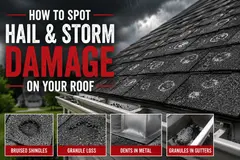
- Hail. Look for round, dark bruises where the protective granules have been knocked loose, exposing the asphalt underneath. On metal vents and gutters you’ll often see small dents — a useful tell, because if hail dented the metal, it almost certainly affected the shingles too.
- Wind. High gusts lift and crease shingles, break the adhesive seal that holds them down, or peel them off entirely. Creased shingles are the sneaky ones: they look attached but no longer shed water the way they should.
- Debris. Fallen limbs and wind-driven branches gouge and puncture the surface, and they tend to do the most damage to flashing around chimneys, vents, and valleys — the very spots where leaks start.
From the ground, grab a pair of binoculars and check for shingles that look out of alignment, dark patches, or granules collecting in your gutters and at the base of downspouts. A coffee-can’s worth of granules after a big storm is a real warning sign. What you should not do is climb up to check yourself — storm-damaged roofs are slick and unstable, and a fall isn’t worth it. That’s what a professional inspection is for.
What to Do in the First 48 Hours
The steps you take right after a storm can make the difference between a smooth insurance claim and a frustrating one. Here’s the order we recommend:
- Document everything. Take photos and video from the ground, including any interior water spots, fallen debris, and dented gutters or vents. Date-stamped images are gold when you file a claim.
- Handle emergencies safely. If you have an active leak, place buckets and move valuables — but don’t attempt rooftop tarping yourself. A roofer can install a proper emergency tarp to stop further water intrusion.
- Get a professional inspection before you call your insurer. This is the step most people skip, and it’s the most important one. Knowing what’s actually wrong with your roof before you open a claim puts you in a far stronger position.
- Then file your claim. With documentation and a professional assessment in hand, the conversation with your insurance company goes a lot more smoothly.
If you’d rather have an expert look first, that’s exactly what we do. You can learn more about our full roofing services or call us directly to schedule a free post-storm inspection.
How Roof Insurance Claims Really Work in Illinois
Most homeowners’ policies in Illinois cover sudden storm damage from hail and wind — this is different from gradual wear and tear, which isn’t covered. The catch is that the burden is on you to demonstrate that the damage came from a specific storm event. That’s where documentation and a professional inspection earn their keep.
A few things worth knowing before you file:
- Most policies have a window for filing storm-damage claims, so don’t sit on it — document and assess promptly.
- You are free to choose your own contractor. You are never required to use whoever your insurance company suggests.
- A reputable local roofer will meet your adjuster on-site, point out damage the adjuster may miss, and make sure the scope of the claim reflects the real condition of your roof.
- Be cautious of out-of-town “storm chaser” crews that appear after every big weather event. They knock doors, collect deposits, and are gone before the warranty matters. A contractor who’s been here since 1946 isn’t going anywhere.
As a GAF Master Elite® contractor — a certification held by only the top 2% of roofers nationwide — we work with homeowners and their adjusters every storm season to make sure claims are handled fairly and the repair is done right the first time.
Repair or Replace?
Not every storm-damaged roof needs to be replaced. The right call depends on the extent of the damage, the age of your roof, and how much life it had left to begin with. As a rough guide: isolated damage on a relatively young roof is usually a repair, while widespread hail bruising or a roof already near the end of its service life often makes full replacement the smarter long-term investment — especially when insurance is helping cover the cost.
An honest inspection should give you a clear recommendation either way, with no pressure to replace something that just needs a fix. If you’re weighing the decision, our team can walk you through it. We serve homeowners throughout the area, including Chatham and Petersburg, and we’re glad to give a straightforward assessment.
Don’t Wait Until the Next Storm
The biggest mistake we see is waiting. A small area of lifted shingles or a bruised patch isn’t urgent — until the next downpour drives water into your attic, your insulation, and eventually your ceiling. Catching storm damage early is almost always cheaper and simpler than dealing with the water damage that follows.
If a storm has rolled through and you’re not sure where you stand, the simplest next step is a free inspection. Call Sutton’s at (217) 528-3911 during business hours and we’ll get you on the schedule. We’ve protected Sangamon County roofs for over 80 years, and we’d be glad to take a look at yours.
Frequently Asked Questions
How do I know if my roof has storm damage if I can’t see anything from the ground?
Much storm damage isn’t visible from the ground — creased shingles, broken adhesive seals, and early hail bruising often look fine from below. The reliable way to know is a professional roof inspection, which checks the shingles, flashing, and vents up close. Sutton’s offers free post-storm inspections throughout the Springfield area.
Does homeowners insurance cover storm damage to my roof in Illinois?
Most Illinois homeowners’ policies cover sudden hail and wind damage, which is treated differently from gradual wear and tear. To get a claim approved, you’ll generally need to document the damage and show it resulted from a specific storm. A professional inspection before you file strengthens your position considerably.
Should I call my insurance company or a roofer first after a storm?
We recommend a professional inspection first. Knowing the actual extent of the damage before you open a claim helps you avoid an under-scoped settlement and gives you accurate information for the conversation with your insurer. A reputable roofer can also meet your adjuster on-site.
How quickly should I act after storm damage?
As soon as it’s safe. Most insurance policies have a filing window, and unaddressed damage tends to worsen with the next rain. Document the damage, arrange an inspection, and address any active leaks promptly — even small issues can turn into costly interior water damage if left alone.
Do I have to use the contractor my insurance company recommends?
No. You have the right to choose your own contractor. Selecting an established local company — rather than an out-of-town storm-chaser crew — means someone will stand behind the warranty and be here long after the work is done. Sutton’s has served Sangamon County since 1946.