Homeowners researching siding cost in Springfield, IL should understand how house size, wall height, material selection, trim, and labor affect pricing. When you start planning a home makeover, the first question is usually about the budget. To get a real number, you have to know exactly how much material to order. While it sounds simple, measuring a house for siding is a bit more complex than just looking at the floor plan. A 2000 sq ft house refers to the living space inside but your siding installation contractor needs to know the total area of the exterior walls, which can vary wildly depending on the shape of your home.
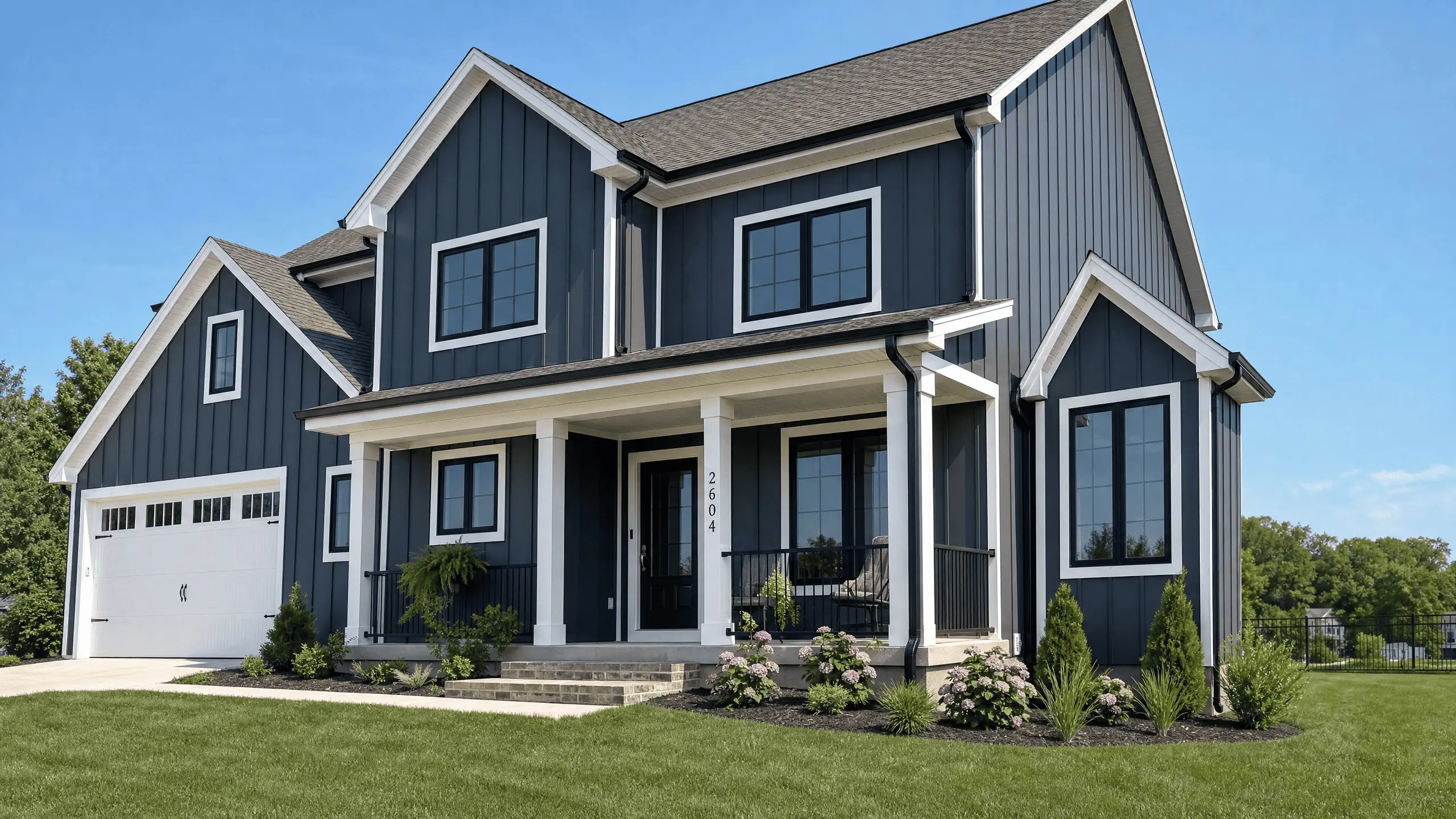
Important Siding Cost Factors
- Wall Height: Higher ceilings or multiple stories increase the total surface area.
- Gables: The triangular peaks under your roofline require extra material and custom cuts.
- Openings: You have to subtract the square footage of all windows and doors.
- Waste Factor: Pros always add 10% to 20% to the order to cover mistakes and trimming.
- Exposure: The “reveal” of the siding style (how much of the board shows) changes the count.
- Corners and Trim: Specialized pieces for corners and edges are measured by the linear foot.
How Siding Measurements Work in Springfield, IL
For a standard 2,000 square foot home (living space), you will typically need between 22 and 28 squares of siding. In the industry, a “square” is a unit of measurement equal to 100 square feet of wall area.
If your home is a simple, single-story ranch, you might be on the lower end of that range. However, if you have a two-story home with high gables and a complex layout, your Expert residential siding contractors will likely need closer to 30 squares to account for the extra height and the waste created by cutting around corners.
Factors That Affect How Much Siding is Needed
Estimating material isn’t just about the length of the walls. Several variables can push your material needs higher or lower.
The Shape of the House
A perfectly square house is the most efficient to the side. Every time you add a bump-out, a bay window or an “L” shape to the floor plan, you add surface area and corners. More corners mean more waste because boards have to be cut to fit and the leftover scraps often can’t be used elsewhere.
Number of Windows and Doors
While you don’t put siding over a window, a house with a lot of glass actually requires more careful measuring. You subtract the area of the openings from your total but you have to add “J-channel” and extra trim pieces to seal those openings. If your house has twenty windows, your trim costs will be much higher than those of a house with ten.
The Waste Factor
No job uses 100% of the material ordered. Pieces get cut wrong or the end of a long board leaves a three-foot scrap that is useless. Most siding contractors near me will factor in a 10% waste margin for a simple house and up to 20% for a house with lots of gables and odd angles. It is better to have a few boards left over than to have the crew stop working because they ran out.
Siding Profile and Overlap
The siding style you choose affects how much you need. For example, some vinyl siding has a 4-inch reveal, while others have a 7-inch reveal. If the overlap is deep, you are essentially paying for more material to cover the same amount of wall. Your contractor will calculate the “effective coverage” of the specific brand you choose to ensure the math is right. The National Association of the Remodeling Industry has more on how material choices affect overall project cost.
Want durable, quality siding? See our Sherman siding services.
Wrap Up
Getting the measurement right is the first step toward a successful project. If you under-order, the job stalls; if you over-order, you waste money. Finding the right balance takes experience and an eye for the grit of the home’s design. For a team that can give you an honest, accurate estimate and a flawless install, you should talk to Sutton’s – a GAF Master Elite certified company with reliable roofing services. We make sure every square is accounted for so your home looks perfect from top to bottom.
Read Also: What are the benefits of installing new siding?
FAQs
What is a “Square” in roofing and siding?
A square is 100 square feet (a 10′ x 10′ area). Contractors use this unit to make pricing and ordering easier. If your contractor says you need 25 squares, they are ordering 2,500 square feet of material.
Can I measure the house myself?
You can get a rough estimate by measuring the length of each wall and multiplying it by the height. However, before you buy material, let a pro do a “final take-off.” They have the tools to measure steep gables and complex angles that are hard to get right with a standard tape measure.
What happens to the extra siding after the job?
You should always keep a box or two. If a storm damages a few panels or you decide to add a new vent later, having the exact same color and “dye lot” from the original job is a lifesaver. Siding colors can fade slightly over time, so original leftovers are the best way to do a seamless repair.