
Homeowners researching sunrooms in Springfield, IL should understand the differences between three-season, four-season, and solarium designs. Sunroom construction brings sunlight inside and creates extra living space you can enjoy year-round. Some are simple and light. Others are sturdy and warm. People choose them for morning coffee, reading, gatherings, or a plant space. But not all sunrooms are built the same.
Some only work in warm weather, while others are strong enough for winter use. Some are open to the breeze, others use full glass walls. If you plan to choose among different types of sunrooms, you should know your options. Some common types include three-season, four-season, and solarium. This helps you match the style to your home and climate.
Popular Sunroom Styles in Springfield, IL
Sunroom types differ mainly by what weather they handle, how they’re built, and how many months you can use them comfortably. Which one is right for you? It depends on your local weather and how you plan to use your room. Let’s break them down.
Three-Season Sunroom
A three-season sunroom is mostly for spring, summer, and fall. It usually has large windows and, in some cases, screens, and is not fully insulated. It feels like a part‑indoor, part‑outdoor space.
Three-season rooms are lighter in structure. They are usually less costly. And they make you feel closer to the outdoors. However, in winter, trusted sunroom contractors recommend adding interior heating, as they are not designed for cold weather.
Four-Season Sunroom
A four-season sunroom is built to stay comfortable year-round. It uses better insulation, often double‑pane glass, and can attach to your home’s HVAC system.
These rooms feel more like a true living space. You can enjoy sunshine even in winter. Snow doesn’t make you cold inside. They cost more than three-season rooms, but they offer greater utility. In cold climates, these are often the better choice. In mild climates, they feel like a cozy sunlit room every day. The National Association of the Remodeling Industry has more on choosing home addition projects that fit your climate and budget.
Solarium
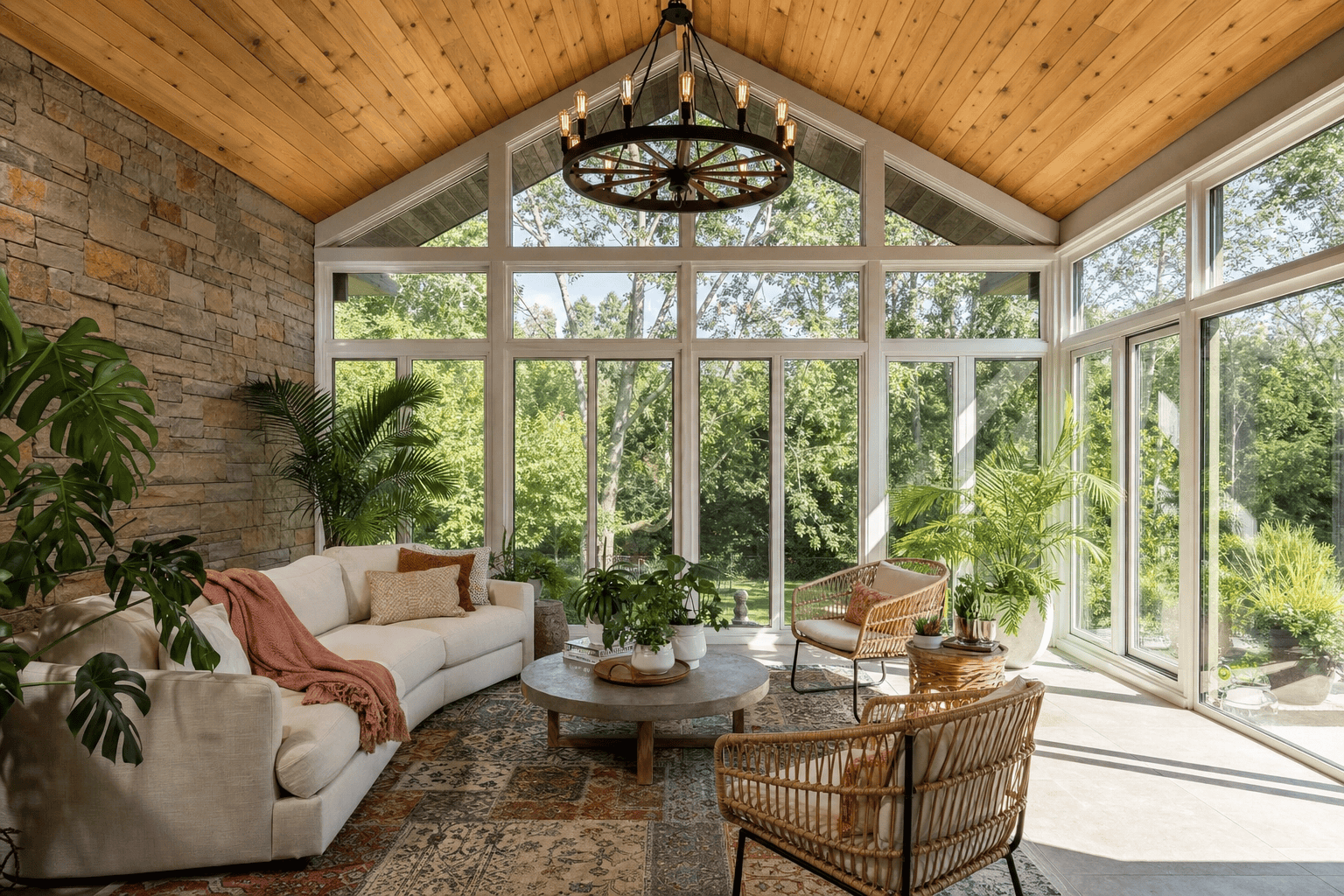
A solarium is constructed with 360-degree glass walls and usually includes a glass roof. The space appears to have wide-open areas due to its bright illumination. The space almost feels like a greenhouse environment.
Plants grow successfully in solariums. People use them for art rooms, reading nooks, or places to watch nature from outside without leaving the house. The extensive glass design of a solarium requires you to install more powerful heating and cooling systems. The light inside a solarium reaches its highest level of brightness when the temperature reaches optimal conditions.
Ready to start your project? Contact us today!
Simple Comparison Table for Different Types of Sunrooms
- A three-season sunroom is best used during spring, summer, and fall. It typically has low insulation, often requires heating in winter, and is valued for being affordable and airy. Commonly, it serves as a sitting or dining area.
- A four-season sunroom can be enjoyed all year long. It has high insulation, usually connects to the home’s HVAC system, and provides comfort in any season. People often use it as an extra living space.
- A solarium is designed for maximum natural light and can also be used throughout the year. It has medium to high insulation, needs a strong heating system, and is ideal for plants, relaxing, and enjoying views.
Tips to Choose the Best Type of Sunrooms
Choosing the right sunroom is more than picking the best design. You need to consider how you live, where you live, and how you want to use the space. If you’re searching for a sunroom company near me, these tips will help you make a sound choice.
- Check Climate and Weather Patterns
Your local climate shapes the type you need. If winter gets cold, a four-season room makes sense. In warm-weather zones only, a three-season or screened porch may be sufficient. Think about how cold or hot your area gets before deciding.
- Set a Clear Budget for the Project
Sunroom costs can vary a lot. Simple screened rooms cost less. Full glass or solarium rooms cost more. Knowing your budget early helps narrow choices. It also keeps the project from growing unexpectedly.
- Pick Materials That Fit Your Needs
Sunroom frames can be wood, vinyl, aluminum, or fiberglass. Each has benefits. Wood feels classic but may need more care. Vinyl is low‑maintenance and bright. Aluminum is strong and light. Think about what works best for your lifestyle and budget.
- Consider When You Will Use the Room
Will you use it only in summer? Or do you plan to use it every month? If you want year‑round use, four‑season construction and insulation help. If only seasonal use is needed, a lighter room may work.
- Match Home Style and Design
Your sunroom should fit the look of your house. A style that matches your home feels natural. It also adds to the overall look of your property. But don’t worry if styles differ slightly. Creative design can still make it feel linked.
- Think About Light Needs and Direction
Windows and walls should face where the sun hits best. The south or west sides give more afternoon light. The East gives morning sun. Too much light can heat the room fast. You may consider shades or blinds in that case.
Read Also: How New Door Installations Can Increase Your Home’s Value
Conclusion
Sunrooms make everyday living brighter. They provide a place for sun, comfort, and nature views. The right type depends on your climate, budget, and how you want to use the space. Three‑season and four‑season rooms serve different needs. Solariums bring maximum light and a greenhouse feel. Screened porches and glass walls offer lighter alternatives to sunrooms.
Attached or detached styles add options for use and privacy. Roofed patio rooms are simple yet effective. By considering your needs, sun exposure, and materials, you can find a sunroom that enhances comfort and enjoyment. The right types of sunrooms become a favorite part of your home.
If you want to know more about the best types of sunrooms and their installations, head straight to Sutton’s – a GAF-certified, licensed & insured contractor of a roofing company.