Vinyl is one of the most popular exterior materials for homes, thanks to its durability, low maintenance requirements, and extensive color range. However, even though it’s designed to be tough, it still requires regular care to maintain its appearance. Over time, dirt, mold, mildew, and environmental pollutants can accumulate, leaving your siding looking dull and dirty.
Cleaning vinyl siding is a relatively simple task if done correctly. So, how to clean vinyl siding? You can apply a cleaning solution, scrub the siding, and then rinse it with water to achieve a clean finish. With just a few supplies, some elbow grease, and a bit of patience, you can restore your vinyl siding’s beauty and keep it looking great for years to come.
Step-by-Step Instructions to Clean Vinyl Siding
Cleaning vinyl siding requires basic preparation and controlled washing. Each step serves a specific function in protecting the surface.
1. Gather Necessary Cleaning Supplies
Collect all required tools before beginning:
- Garden hose with adjustable nozzle
- Soft brush or sponge
- Mixing bucket
- Mild detergent, vinegar solution, or vinyl-safe cleaner
- Protective rubber gloves
- Highly reactive chemicals affect vinyl polymers and weaken color coatings. Only low-reactivity cleaners should be used.
2. Rinse the Siding with Water
Initial rinsing removes loose surface particles. Apply water from top to bottom using a steady flow. Upper sections must be cleaned first to prevent runoff streaking across lower panels. Loose debris left in place interferes with detergent contact during later steps.
3. Apply a Cleaning Solution
Prepare a diluted cleaning mixture using equal proportions of water and vinegar or a light household detergent. Commercial vinyl-safe cleaners may also be applied. Spread the solution across small working areas using a soft applicator. Heavily shaded surfaces, such as north-facing walls, generally require a longer contact time. Solution loosens surface films and organic residue without softening the vinyl.
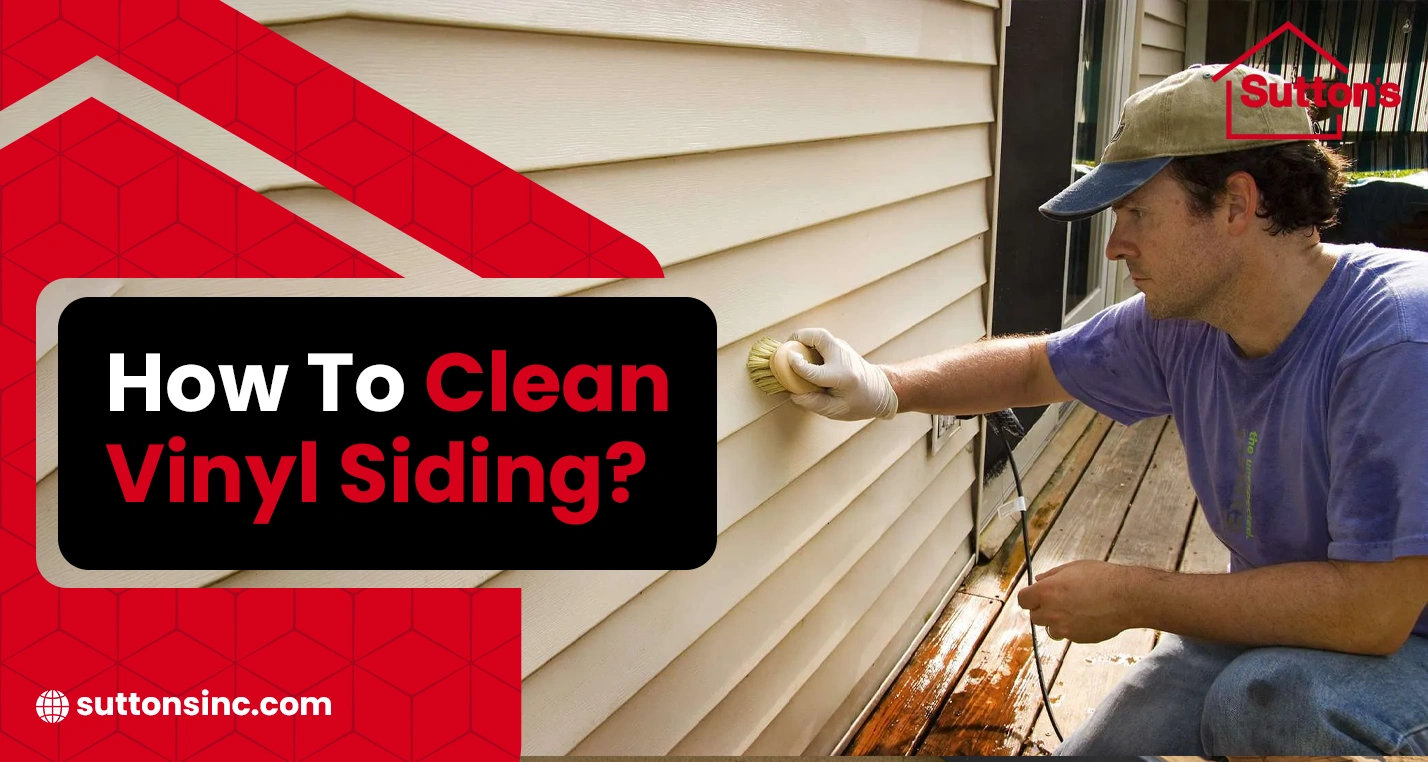
4. Scrub the Siding
Stained areas require manual surface agitation. Apply light, even pressure with a soft-bristled brush, using a circular motion to gently lift dirt and stains without damaging the surface. Mold growth frequently bonds at lap joints and shadow lines. These areas may require repeated light scrubbing. Abrasive pads permanently score vinyl surfaces and are not suitable for this task.
5. Rinse Again and Inspect for Stubborn Spots
After scrubbing, rinse the paneling thoroughly. Residual cleaner attracts new dirt if left in place. Inspect dried sections for streaking, shadow residue, or remaining discoloration. Repeat spot cleaning only where surface marks remain visible.
6. Dry the Siding
Vinyl panels air-dry under normal conditions. Surface drying time varies by temperature and airflow. Cloth drying is optional and is used primarily to prevent mineral spotting in areas with hard water.
Tips to Clean Vinyl Siding for a Spotless Exterior
The frequency of maintenance and the selection of tools are the two main factors that directly determine the appearance and service life of the siding.
Clean Regularly to Prevent Build-Up
Washing once a year or every other year is sufficient to prevent the bonding of stains. Long-term exposure of the surface increases the risk of difficult removal, discoloration, and in some cases, even damage.
Avoid Harsh Chemicals and Abrasives
All the above-mentioned ingredients in the cleaning products are particularly harmful as they can cause the surface coatings to deteriorate. Non-reactive cleaners that do not contain any harsh chemicals preserve the color stability and the strength of the panels.
Use a Soft Brush or Sponge
Hard tools cause scratches on the surface, which will later become home to dirt and water. The soft cleaning materials will not damage the panel.
Focus on High-Maintenance Areas
Irrigation runoff zones and shaded elevations are areas where residue accumulates faster than on open and sun-exposed walls.
Remove Mold and Mildew with a Specialized Cleaner
Biological growth needs targeted cleaning agents. General detergents are not effective as they do not kill spores. All products used must comply with the vinyl manufacturer’s safety limits.
Avoid Pressure Washing Vinyl Siding
The extremely powerful water stream forces the moisture behind the panel seams. The result is moisture being trapped, which leads to insulation saturation and even damage to the wall cavity.
Use Eco-Friendly Cleaning Methods
Low-toxicity cleaning solutions are less harmful to the environment and do not leave residues on surfaces. Plus, they do not affect cleaning performance.
Conclusion
Vinyl siding cleaning is not a complicated process; nonetheless, it still requires the proper tools and a little bit of detail-oriented work. By simply following these easy steps and tips, your exterior will look neat and shiny without the high cost of professional cleaning.
The most important thing is to clean regularly, as this prevents dirt, mold, and mildew from building up, ensuring your siding remains excellent for years. Having learned how to clean vinyl siding now means less effort to keep your home looking fresh and well-maintained.
If you are looking for professional-grade vinyl siding installer, head straight to Sutton’s. Our experts provide guidance on cleaning vinyl siding.